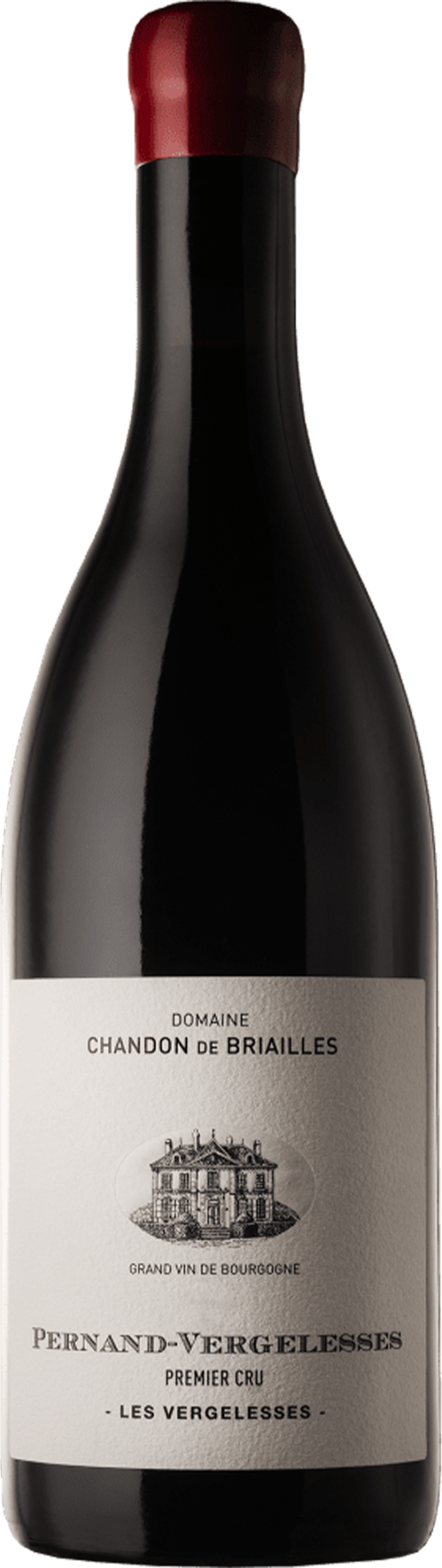
Domaine Chandon de Briailles is a wine producer in the north of the Côte de Beaune in Burgundy. The domaine covers 14 hectares (34 acres) of vineyards spread across Savigny-lès-Beaune, Pernand-Vergelesses and Aloxe-Corton, and produces mulitple wines from the Corton Grand Cru hill.
The domaine has been owned by the de Nicolay family since 1834. Countess Chandon de Briailles, (a relation to the Moët & Chandon family) took over the reins in 1982 and dedicated herself to reviving the status of the domain and its wines. Today, Domaine Chandon de Briailles produces an average of 50,000 bottles of wine per year, and has practiced biodynamic principles since 2005.
As is the case for most of Burgundy, the domaine's white wines are produced from Chardonnay and the reds from Pinot Noir. In the winery, as little intervention as possible is used throughout the vinification process with indigenous yeasts used for fermentation. Wine is aged on lees and then carefully racked and bottled with a gravity feed to preserve the phenolic content. On average, wines will spend between 14 to 18 months aging in barrel.
Domaine Chandon de Briailles's Corton wines are sourced from the climats of Les Maréchaudes, Les Bressandes, Clos du Roi and Corton Blanc. The estate also makes a Aloxe-Corton Premier Cru, a Savigny-lès-Beaune Premier Cru and three Pernand-Vergelesses Premier Cru wines.This 1.226-hectare plot, planted in 1954, lies below the road that separates it from the "Île des Vergelesses" vineyard. Here, the surface soils are clay with a high iron content and a red hue.
Limestone bedrock lies beneath. This results in a wine that is rich in substance and rather round, approachable in its youth.
Vinification is carried out without the use of pumps or sulfites, and with whole bunches, except in years of frost or hail. Aging takes place in Burgundy barrels that have held several vintages for 90% of the blend, and in new barrels for 10%, for a period of 14 to 18 months. Here we have a vintage that is both sunny and bountiful. A very dry and hot spring and summer could have been disastrous for the vines, but their resilience allowed them to adapt remarkably well and produce an exceptional vintage.
The wines are rich and generous, yet possess finesse and complexity—everything one expects from a fine, locally sourced Pinot Noir. The harvest took place from August 25th to September 10th and was relatively abundant; the grapes were very healthy and required minimal sorting. Each vintage is unique.