Rating:
90
James Suckling - Jamessuckling.com
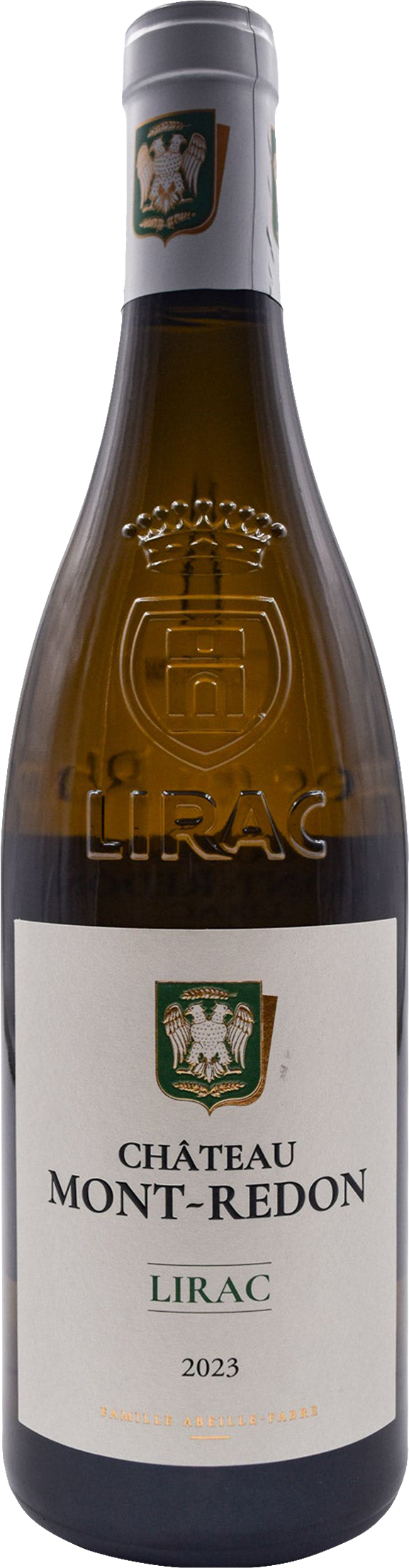
Textured, balanced and attractive with aromas of spiced apples, dried plums and baking spices. Medium-bodied with plenty of texture and fresh acidity adding drive to the long, vibrant and flavorful finish. Drink or hold.
Product Description:
Mont-Redon is the locality of our vineyard since Antiquity. The topography of the "round mountain" located at the bottom of the estate inspired the Romans who called it "Montem Rotundum", translated today as Mont-Redon. In the year 1344, the vineyard belonged to the Episcopal see and its terroir was then farmed for its own wines. In the 18th century, this land became the property of the Astier-Mathieu family. Anselme Mathieu, a famous Provençal poet known as Félibre who called himself Marquis de Mont-Redon, ran the estate until the end of the 19th century. After the phylloxera crisis, when everything had to be rebuilt and recreated, Henri Plantin decided in 1923 to purchase the estate, which at that time consisted in only 2.5 hectares of vines.
Traditional bush-vines goblet pruning has shaped our vines over the years for a century. The goblet pruning, very respectful of the sap flow, which we practice from generation to generation ensures the longevity of our vineyard. The oldest vines of the estate are almost a century old; they were planted by our ancestor Henri Plantin.
Henri Plantin (1890 – 1966) acted as a precursor. In 1923, long before the creation of the Châteauneuf-du-Pape Appellation in 1936, he acquired Mont-Redon. The property was isolated from the village and surrounded by woods. A visionary, he set out to group the different plots around the estate and sensed the exceptional nature of the terroirs that will create and define our identity: fine sands (safres), limestone and rolled pebbles on our majestic Plateau. Henri Plantin undertook the first plantations on the plateau; a titanic work to bring to light one of the most beautiful terroirs of the appellation. The following generations contributed, progressively, to extending the estate up to 100 contiguous hectares, proudly making it the largest estate of Châteauneuf-du-Pape appellation.
The following generations contributed, progressively, to extending the estate up to 100 contiguous hectares, proudly making it the largest estate of Châteauneuf-du-Pape appellation.
From the 1950s the family took the plunge and started to explore overseas countries. Our first export market was the USA. Even today, we are fortunate to have importers around the world who have followed us since the 1960s.…
----- Our white Lirac can be enjoyed young for their floral and delicately toasted notes. The smooth texture of the wine.