
10%
OFF

Rating and Description Rating and Description 97
Rating:
97 James Suckling - Jamessuckling.com
Exquisite aromas of lavender, cigar ash and Spanish cedar with dried citrus follow through to a medium body and a solid palate with powerful, ultrafine and linear tannins. The muscle and long finish are so beautiful. Give it two or three years but already a solid wine. Drink after 2028.
Product Description:
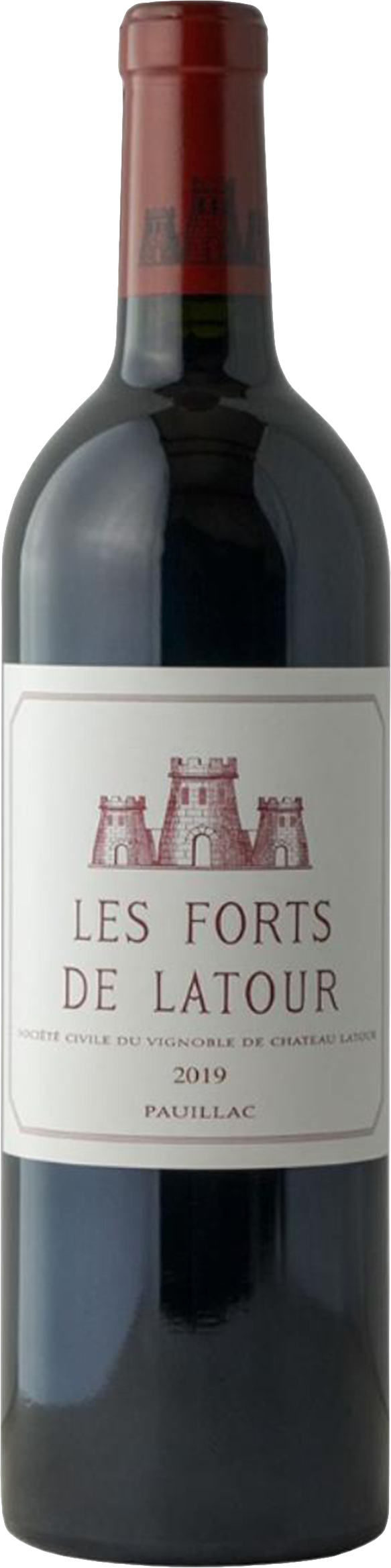
es Forts de Latour takes its name from an historic plot in the « Enclos ». The wine was first labelled with this name in 1966 and constant work on developing its quality has resulted in its achieving the level of a Médoc Grand Cru Classé. The origin of this wine is threefold: • The edge of the Enclos. • Some plots that could be used in the Grand Vin may finally be included in the Forts de Latour blend, depending on how their quality is judged during the blending tastings. • Plots located outside the Enclos, in Cru Classé areas of Pauillac: These consist on the one hand, of plots such as Piñada, Petit Batailley and St. Anne, which have belonged to the estate for more than a century and whose vines benefit from a high average age (around 40 years), synonymous with quality. And on the other hand, of a seven hectare island of vines in the commune of Artigues on gravel terraces, which was acquired in 2005. Plus a handful of plots (about 5 hectares) acquired in 2012. These various blocks of plots present very different terroirs, thereby offering Forts de Latour more varied characteristics and flavour profiles depending on the vintage. Les Forts de Latour is produced with the same meticulous care as the Grand Vin, both in the vineyard and in the winery. The only notable difference, apart from the origin of the grapes, is the proportion of new barrels (50 to 60%) used in the maturing stage. The blend for Forts de Latour can vary from one year to the next but there is always a higher proportion of Merlot (25 to 30%) compared to the Grand Vin. ---- 2019 ------ Linear and very focused yet silky smooth and round, the aromas keep on developing revealing great complexity and depth of flavour. 2019 is characterised by its harmony and balance. A cool wet spring followed by a warm and dry summer created the right conditions for a generous crop of exceptional quality. After a mild and wet autumn, January 2019 was wet (117mm) and quite cold with temperatures 1.6°C lower than normal. The second half of February was much warmer, and this caused the soils to warm up quickly, encouraging an early yet even bud break, registered on 21st March for the Merlot and on 28th March for the Cabernet Sauvignon. April was stormy (96mm) and cold with a frosty spell mid-month. This cold weather was beneficial as it slowed down vegetative growth, enabling the vines to develop more progressively. Early June was very unsettled, cool and rainy. However, the weekend from 30th May to 2nd June was exceptionally fine and hot (32°C) so the flowering went well. The Merlot vines were in mid-bloom on 1st June followed by the Cabernet Sauvignon the next day. Hot and dry weather then set in from mid-June and continued throughout the summer. This led to a progressive increase in hydric stress on certain plots with some sunburn and leaf-loss on younger plants. 27mm of rain in just 4 days at the end of July gave the vines some respite and kick-started the colour-change, which as registered on 6th August for both the Merlot and Cabernet Sauvignon. Thanks to these favourable conditions which lasted until mid-September, the berries ripened in the best possible manner and the grapes remained healthy right up to harvest. The Merlot harvest began in the first plots on Friday 13th September and finished on 23rd September. We started picking the Cabernet Sauvignon on 21st September and continued until Saturday 5th October 2019.
Specifications Specifications
| Color | Red |
| ABV | N/A |
| Size | 1.5L |
| Closure | Cork |
| Features | Organic and Biodynamic |
| Varietal(s) | Cabernet Sauvignon, Merlot, Petit Verdot |
| Taste | currant, blackberry, cherry, bell pepper, olive, asparagus, spice, ginger, oak, vanilla, black cherry, plum, smoke, toast, tar, lead, cedar, molasses and dark fruit |
| Nose | currant, blackberry, cherry, cedar, cigar box, violet, rose, truffle, earth, coffee, leather, mocha, vanilla and tobacco |